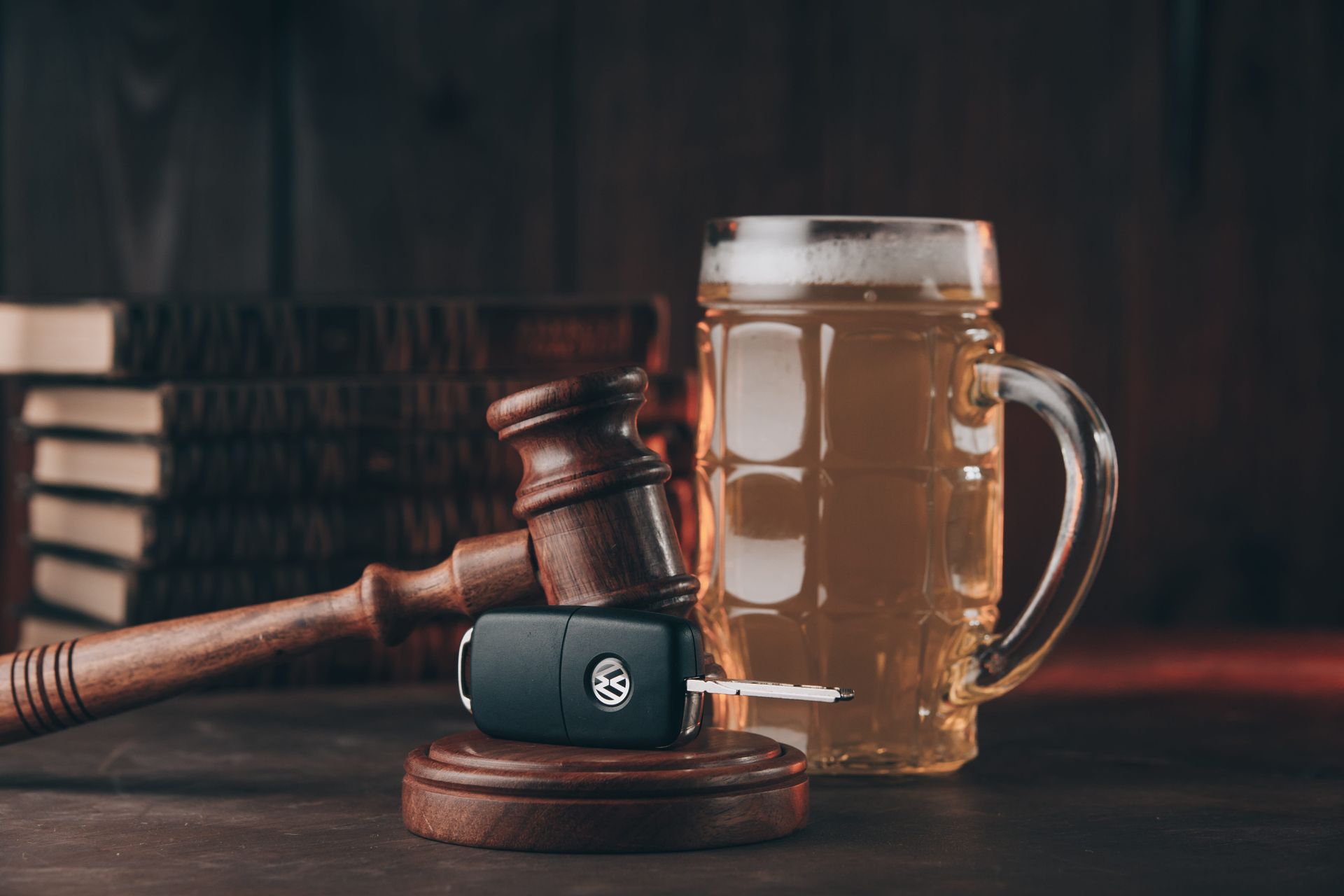

Can You Refuse a Breathalyzer Test in Massachusetts?
Can You Refuse a Breathalyzer Test in Massachusetts?
If you are arrested for OUI in Massachusetts, police may ask you to take a breath test to measure your blood alcohol concentration.
At that moment, you may wonder: Can I refuse the breathalyzer?
Massachusetts law allows a person to refuse a post-arrest chemical breath test, meaning police generally will not force the breath test after a refusal. However, refusing has significant consequences for your driver's license.
Massachusetts is an implied-consent state. By operating a motor vehicle on Massachusetts roads, drivers are deemed to have consented to chemical testing under certain circumstances after an OUI arrest. Refusing the test can result in an immediate license suspension that may last anywhere from 180 days to several years—or even for life in certain cases.
Understanding the difference between the criminal OUI charge and the administrative consequences of refusing a breath test is important after an arrest.
What Is Massachusetts' Implied Consent Law?
Massachusetts General Laws Chapter 90, Section 24 establishes the state's implied-consent rules.
Under the law, someone who operates a motor vehicle on a public way or other qualifying location is generally deemed to have consented to a chemical test or analysis of their breath or blood if they are arrested for operating under the influence of alcohol and the statutory requirements are satisfied.
For a breath test, the request generally occurs after the person has been arrested for OUI.
The law also requires the officer to have reasonable grounds to believe the person had been operating under the influence.
Implied consent does not mean that police simply administer a breath test regardless of what the driver says.
If the person refuses after being informed of the license consequences, Massachusetts law provides for an administrative suspension of the person's driver's license or right to operate.
Can You Say No to the Breath Test?
Yes, a person can refuse to submit to the post-arrest chemical breath test.
Under Massachusetts law, if the arrested driver refuses after receiving the required warning, the test generally is not administered.
However, refusing does not come without consequences.
The driver's license or right to operate can be suspended immediately, and the length of that suspension depends heavily on the driver's age and prior OUI history.
That is why the question is not simply, “Can I refuse?”
The more complete question is:
What happens if I refuse?
What Happens Immediately After You Refuse?
When a person refuses a qualifying chemical test after an OUI arrest, Massachusetts law directs the arresting officer to take several steps.
The officer generally will:
- Take custody of the person's Massachusetts driver's license or right to operate
- Provide written notice of the suspension
- Report the refusal to the Registry of Motor Vehicles
- Arrange for the vehicle to be impounded for 12 hours following the refusal
The suspension becomes effective immediately upon receipt of the suspension notification from the police officer.
This means you do not necessarily wait for an OUI conviction before losing your driving privileges.
The refusal suspension is an administrative consequence arising from the refusal itself.
How Long Is Your License Suspended for Refusing a Breathalyzer?
The length of a chemical-test refusal suspension depends on your circumstances.
For many drivers age 21 or older with no qualifying prior OUI history, the refusal suspension is generally 180 days.
The consequences increase significantly when there is prior OUI history.
Depending on qualifying prior convictions or prior assignments to alcohol or controlled-substance education, treatment, or rehabilitation programs, a refusal can result in substantially longer suspension periods.
For example, Massachusetts law provides refusal suspensions that can increase to:
- 180 days in certain cases without qualifying prior history
- 3 years when applicable prior history exists
- 5 years with additional qualifying prior history
- Lifetime loss of driving privileges in certain circumstances
There are also special provisions involving certain serious prior OUI-related offenses.
Because Massachusetts law considers prior convictions and certain prior program assignments—and can consider comparable offenses from other jurisdictions—you should not assume you know the length of your suspension without having your driving and court history reviewed.
What If You Are Under 21?
Drivers under 21 face additional consequences.
Massachusetts has separate rules governing underage operators who refuse or fail chemical testing after an OUI arrest.
An underage driver may face the chemical-test refusal suspension as well as additional Youth Alcohol Program consequences.
Multiple alcohol-related suspensions may also be required to run consecutively rather than at the same time.
As a result, an OUI arrest can have particularly significant licensing consequences for someone under 21.
Is Refusing a Breathalyzer a Separate Crime?
A chemical-test refusal primarily triggers administrative driver's-license consequences under Massachusetts law.
It is important to distinguish that refusal from the underlying OUI prosecution.
The Commonwealth can still pursue an OUI charge even without a breath-test result.
A refusal therefore does not make the OUI charge disappear.
Can Your Breathalyzer Refusal Be Used Against You at Trial?
Massachusetts provides an important protection that differs from the law in many other states.
Evidence that a defendant refused to consent to a chemical breath or blood test generally cannot be admitted against the defendant in a civil or criminal proceeding, subject to the statutory exceptions for certain administrative proceedings.
Massachusetts constitutional law also protects against using the refusal as evidence of guilt in an OUI trial.
In other words, prosecutors generally cannot argue to the jury that you must have believed you were intoxicated because you refused the breath test.
However, the refusal can still be relevant in proceedings concerning the administrative license suspension.
Does Refusing Mean the OUI Case Will Be Dismissed?
No.
A breath-test result is only one potential type of evidence in an OUI case.
Even without a chemical breath-test result, prosecutors may attempt to establish impairment using other evidence.
That evidence may include:
- The reason for the traffic stop
- Driving behavior
- An accident
- Officer observations
- The smell of alcohol
- Speech
- Coordination
- Balance
- Appearance
- Statements allegedly made by the driver
- Field sobriety test performance
- Witness testimony
- Video evidence
- Other circumstances surrounding the arrest
The defense can examine each category of evidence and determine whether it can be challenged.
Can You Be Convicted of OUI Without a Breath Test?
Potentially, yes.
Massachusetts OUI law does not require prosecutors to have a breath-test result in every case.
The Commonwealth may attempt to prove that a defendant operated a motor vehicle while under the influence through observational and circumstantial evidence.
For example, an officer may testify about how the vehicle was being driven, how the driver appeared, what the driver said, and how the driver performed on field sobriety tests.
The absence of a breath result can affect the evidence available to prosecutors, but it does not automatically prevent an OUI prosecution.
What Is the Difference Between Refusing and Failing a Breath Test?
These are two different situations.
Refusing the Breath Test
If you refuse the post-arrest chemical test, Massachusetts law can impose an administrative suspension based on the refusal.
For many drivers 21 and older without qualifying prior OUI history, that suspension is generally 180 days.
Failing the Breath Test
For most drivers age 21 or older, a BAC of 0.08% or greater can trigger a separate administrative license consequence.
Massachusetts RMV guidance states that a driver age 21 or older who registers a BAC of 0.08% or greater generally faces a 30-day suspension for the breath-test failure, subject to applicable statutory provisions and exceptions.
A failed breath test can also provide the prosecution with chemical-test evidence in the criminal case when the result is legally admissible.
Therefore, refusing and failing a test can lead to very different legal and licensing issues.
Does a Breath-Test Refusal Automatically Mean You Lose Your License for 180 Days?
Not necessarily in every case.
Although a refusal triggers a suspension, Massachusetts law provides a process for challenging that suspension.
The available challenge focuses on specific statutory issues.
This is another reason it is important to act quickly after a refusal rather than assuming nothing can be done until the OUI case is over.
Can You Challenge a Breathalyzer Refusal Suspension?
Yes.
Massachusetts law provides a right to seek a hearing concerning a chemical-test refusal suspension.
The issues considered at the hearing are limited.
They generally include:
- Whether the police officer had reasonable grounds to believe you were operating a motor vehicle under the influence on a qualifying public way or place
- Whether you were placed under arrest
- Whether you actually refused to submit to the chemical test
If the Registry determines that the required legal conditions were not satisfied, the license or right to operate may be reinstated.
How Long Do You Have to Challenge the Suspension?
Timing is extremely important.
Under Massachusetts General Laws Chapter 90, Section 24, a person whose license or right to operate has been suspended for a chemical-test refusal is entitled to seek a Registry hearing within 15 days of the suspension.
That is a relatively short period.
Someone who waits several weeks after an OUI arrest before seeking legal advice may therefore risk losing an important opportunity to challenge the refusal suspension through the normal administrative process.
What Happens at a Refusal Hearing?
A refusal hearing is not the same thing as the criminal OUI trial.
The hearing focuses on the statutory issues surrounding the refusal suspension.
Questions can include:
- Did the officer have reasonable grounds to believe you were operating under the influence?
- Were you actually arrested?
- Did you actually refuse the chemical test?
The hearing does not simply determine whether you are guilty or not guilty of OUI.
The criminal prosecution and the administrative license proceeding are related to the same incident but involve different legal questions.
Can You Appeal an Unsuccessful RMV Refusal Hearing?
Massachusetts law provides for judicial review following the Registry's final determination.
A person aggrieved by the Registry's decision generally has 30 days from the final determination to petition the appropriate District Court for judicial review.
The court's review is based on the record established during the Registry hearing.
Because both the administrative hearing and judicial-review process have deadlines and procedural requirements, prompt action is important.
Can You Get a Hardship License During a Refusal Suspension?
Massachusetts law places significant restrictions on driving privileges during a chemical-test refusal suspension.
The statute generally provides that a license or right to operate cannot be restored and that a restricted or hardship permit cannot be issued during the refusal suspension period, subject to specific statutory circumstances.
This can make a refusal suspension especially disruptive for someone who relies on driving for:
- Work
- School
- Childcare
- Medical appointments
- Family responsibilities
- Everyday transportation
The practical consequences of losing a license can therefore extend far beyond the criminal courtroom.
What If Your OUI Charge Is Dismissed or You Are Found Not Guilty?
A favorable result in the criminal case can create an avenue to seek restoration of driving privileges after a refusal.
Massachusetts law provides that, under qualifying circumstances, a defendant may seek a court hearing for restoration after a not-guilty finding or dismissal of all applicable charges and when no other qualifying alcohol-related charges remain pending.
At that hearing, the statute provides a rebuttable presumption in favor of restoring the license, although the Commonwealth can attempt to establish that restoration would likely endanger public safety.
This is another example of why the criminal case and the refusal suspension must be considered together.
Is a Breathalyzer Refusal the Same as Refusing Field Sobriety Tests?
No.
A post-arrest chemical breath test is different from roadside field sobriety tests.
Field sobriety tests generally involve physical or divided-attention tasks that officers use during an OUI investigation.
A chemical breath test is designed to measure alcohol concentration.
Because the tests serve different purposes and are governed by different legal principles, you should not assume that the rules concerning one type of test automatically apply to another.
What Evidence Can Be Used If There Is No Breath Test?
When there is no admissible breath-test result, the prosecution may rely more heavily on other evidence.
A defense attorney may therefore closely examine:
The Traffic Stop
Why did the officer stop the vehicle?
The defense can examine whether police had a lawful basis for the stop.
Driving Behavior
Police reports may allege weaving, speeding, unusual braking, crossing road markings, or other driving behavior.
Those observations should be evaluated in context.
Officer Observations
An officer may describe the driver's speech, eyes, balance, coordination, behavior, or alleged odor of alcohol.
Those observations do not exist in isolation and may have explanations unrelated to impairment.
Field Sobriety Tests
Road conditions, weather, footwear, physical limitations, instructions, and the way the tests were administered can all matter when evaluating field sobriety evidence.
Statements
The defense can examine what the driver allegedly said, how questioning occurred, and whether constitutional protections were followed.
Video
Body camera, cruiser camera, surveillance, or other video may provide evidence that either supports or contradicts written police observations.
The strength of an OUI case depends on the totality of the admissible evidence—not simply whether a breath test exists.
What If You Took the Breath Test Instead of Refusing?
Taking a breath test does not mean the result is automatically beyond challenge.
Questions can arise regarding whether chemical-test evidence was properly obtained and whether it satisfies the requirements for admissibility.
Potential issues can involve:
- The testing device
- Testing procedures
- Records associated with the test
- The circumstances surrounding administration
- Whether applicable legal requirements were followed
Massachusetts has previously dealt with significant litigation concerning the reliability and admissibility of breath-testing evidence.
A defense attorney can review the specific test and records rather than assuming that a reported BAC automatically establishes guilt.
Is a BAC of .08% an Automatic OUI Conviction?
No.
For most drivers age 21 or older, Massachusetts law makes operating a motor vehicle with a blood alcohol concentration of 0.08% or greater one basis for an OUI prosecution.
But an arrest or test result is not itself a conviction.
The Commonwealth still must prove the criminal charge through legally admissible evidence and satisfy its burden of proof.
Depending on the case, there may be issues involving operation, the location of operation, the chemical test, police procedure, or other evidence.
Should You Assume Refusing Is Always the Better Choice?
No.
There is no universal rule that every driver should either take or refuse a chemical breath test.
A refusal can prevent prosecutors from obtaining that particular breath-test result, but it can also trigger an immediate and potentially lengthy license suspension.
Prior OUI history can dramatically increase the consequences.
Someone dealing with a refusal after an arrest should focus on what can be done now, rather than relying on blanket advice about what another driver should have done in a different situation.
What Should You Do After Refusing a Breathalyzer?
If you refused a chemical breath test after an OUI arrest in Massachusetts:
- Keep all paperwork provided by the police.
- Write down what happened while the events are still fresh in your memory.
- Note what officers told you about the test and suspension.
- Preserve any potentially relevant photographs, videos, or other evidence.
- Do not ignore notices from the RMV or court.
- Attend all required court appearances.
- Avoid driving while your license or right to operate is suspended.
- Consider speaking with an OUI defense attorney promptly because refusal-related deadlines can be short.
Driving during a suspension can create additional legal problems.
Why Does Acting Quickly Matter After an OUI Arrest?
An OUI arrest can create two immediate concerns:
- The criminal charge
- Your driving privileges
Those issues can proceed on different tracks.
While the criminal case may take time to resolve, a chemical-test refusal suspension can begin immediately.
Massachusetts also provides a limited time to pursue the initial administrative challenge to a refusal suspension.
Early legal review gives an attorney time to evaluate both aspects of the case.
Facing an OUI Charge After Refusing a Breathalyzer in Massachusetts?
Refusing a breathalyzer does not automatically make an OUI case disappear.
Massachusetts' implied-consent law can impose an immediate driver's-license suspension following a chemical-test refusal, and the duration can become significantly longer for drivers with prior OUI history.
At the same time, Massachusetts generally prohibits prosecutors from using the fact that you refused the breath test as evidence against you in the criminal OUI trial.
The criminal charge itself must still be evaluated based on the other admissible evidence in the case.
William J. O'Neil has practiced law in the greater Springfield area for more than 37 years and represents individuals facing OUI and other criminal charges in Massachusetts.
If you were arrested for OUI in East Longmeadow, Springfield, or a surrounding Massachusetts community, contact The Law Office of William J. O'Neil to discuss the breath-test refusal, your license, the evidence against you, and the options available in your case.